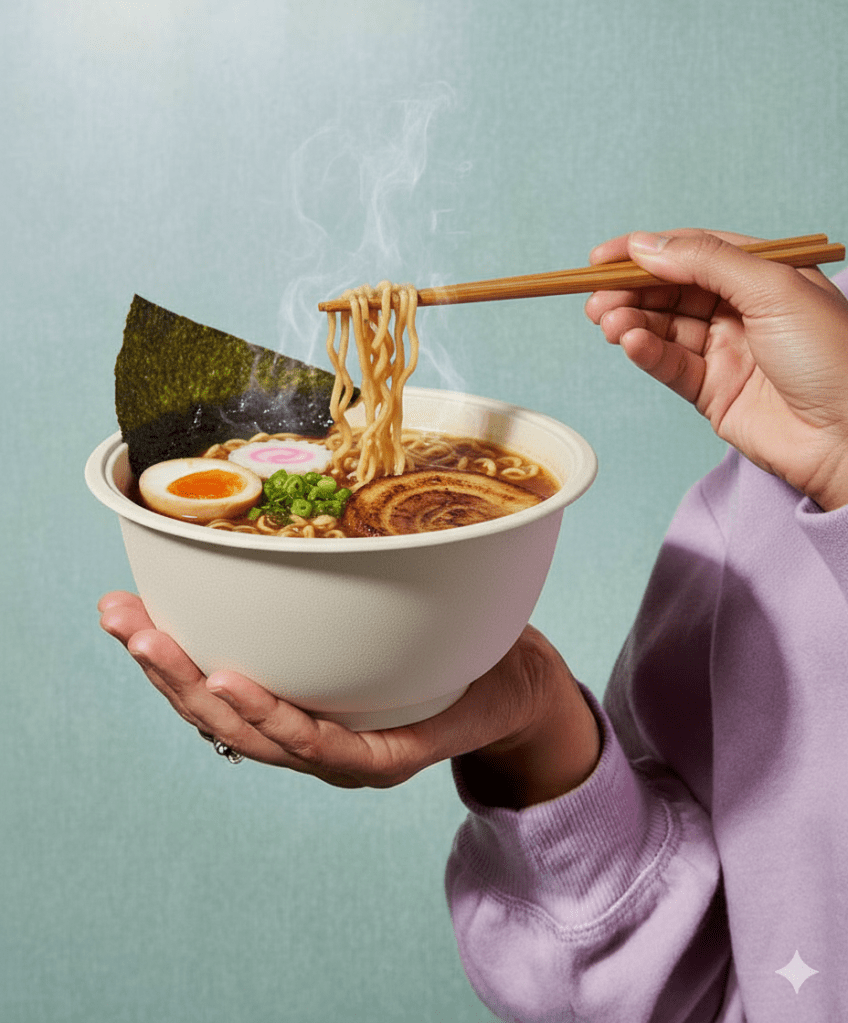
When hot meals with liquid, like ramen, are delivered, the noodles often become soggy as they sit in the broth, losing their texture and flavor.
PROBLEM
When ramen is delivered, the noodles sit in the hot broth and quickly lose their texture, becoming soft and mushy. This affects the overall eating experience and makes the noodles less enjoyable.
PROBLEM
Prolonged contact with the broth can cause noodles to absorb too much liquid, which not only changes their texture but can also dilute their flavor. This reduces the quality of the meal by the time it reaches the user.
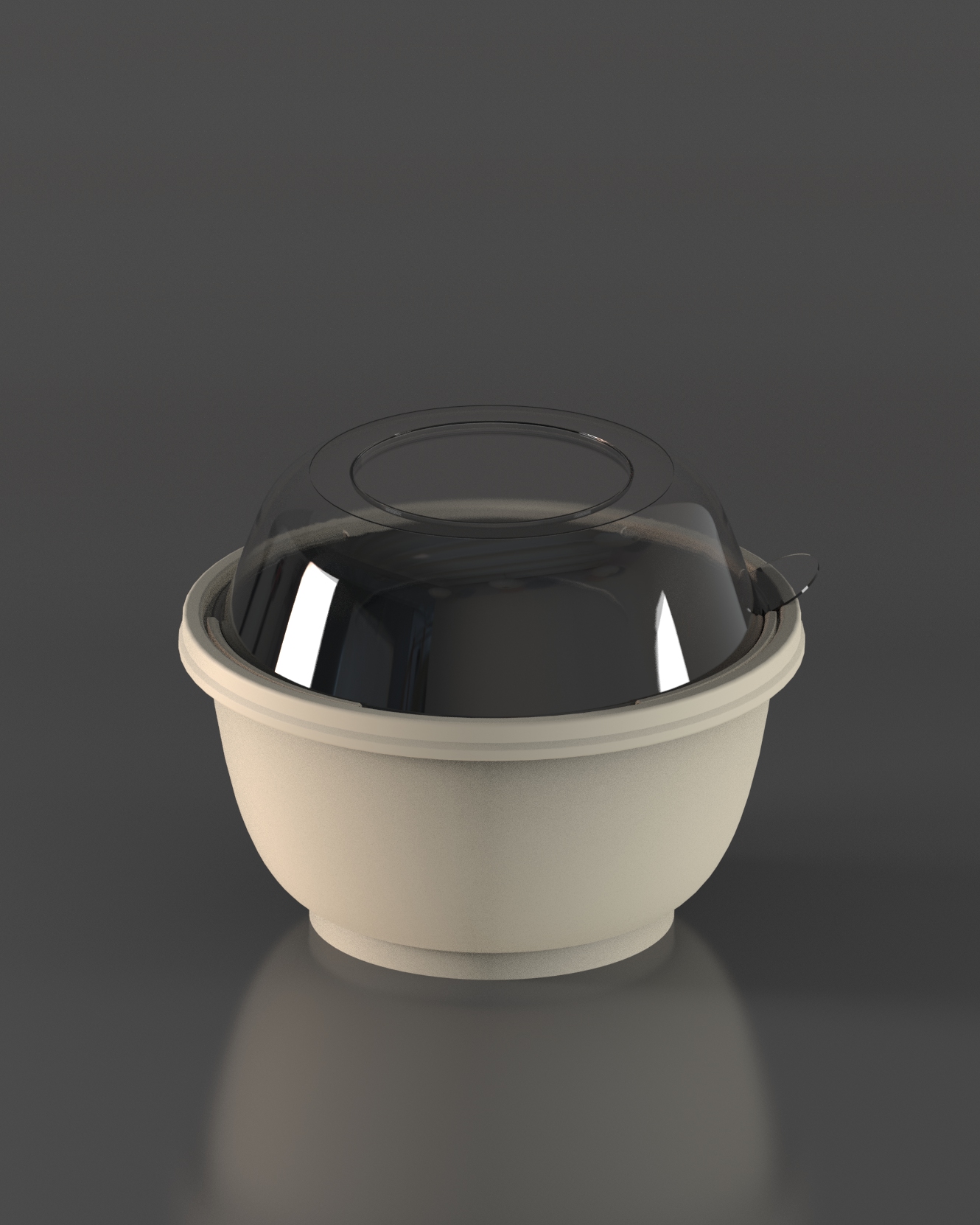
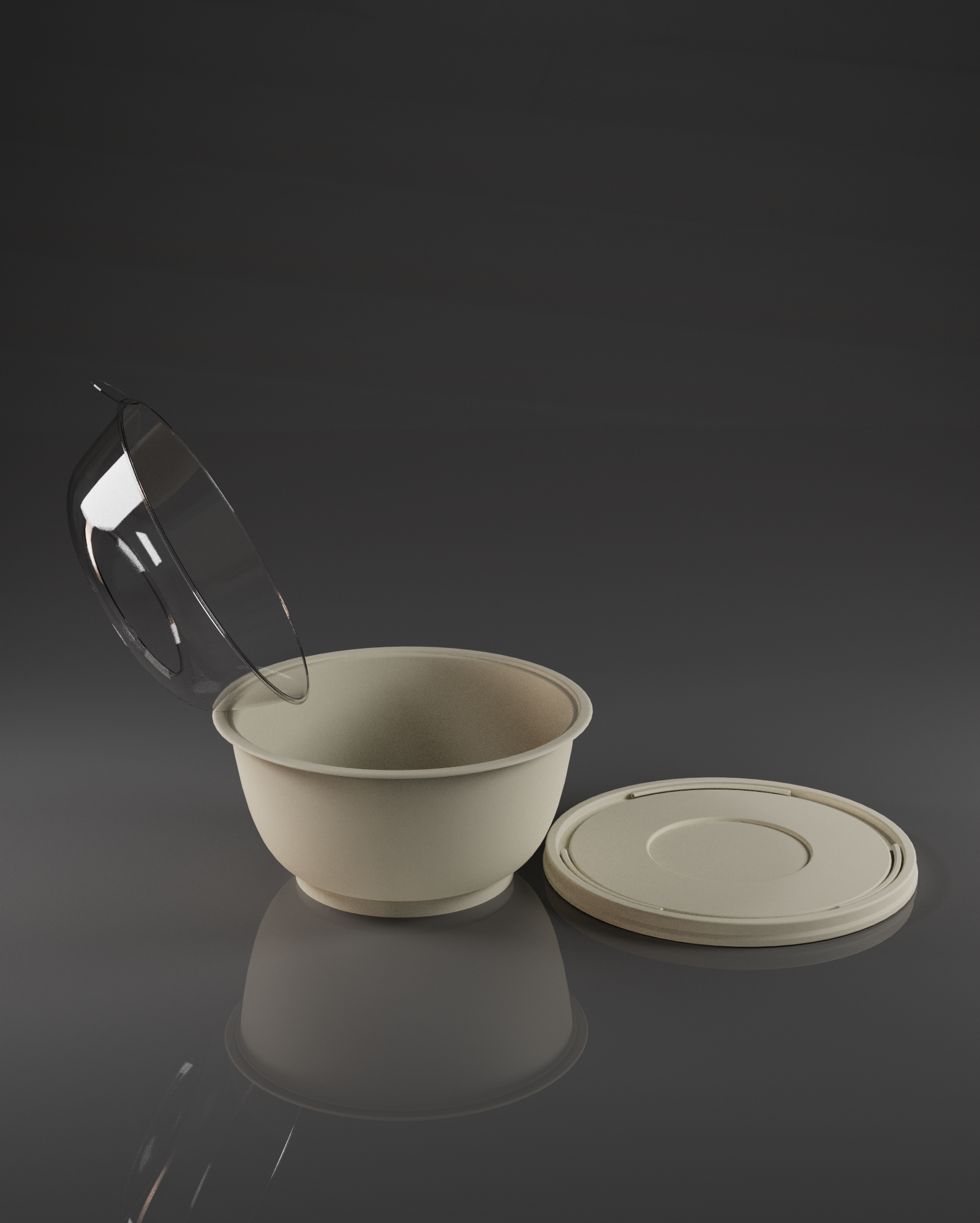
Rami solves these problems by placing the noodles in a separate upper compartment, acting like a lid, while the broth stays below. This keeps the noodles from softening too quickly and preserves their texture and flavor. When the noodles are combined with the hot broth just before eating, it creates a fresh, enjoyable ramen experience.
How can a container design keep noodles and broth separate to preserve texture and flavor until the moment of eating?
MATERIAL
FEATURES
In this product, functionality, eco-friendly materials, and a natural, minimalist design are key.
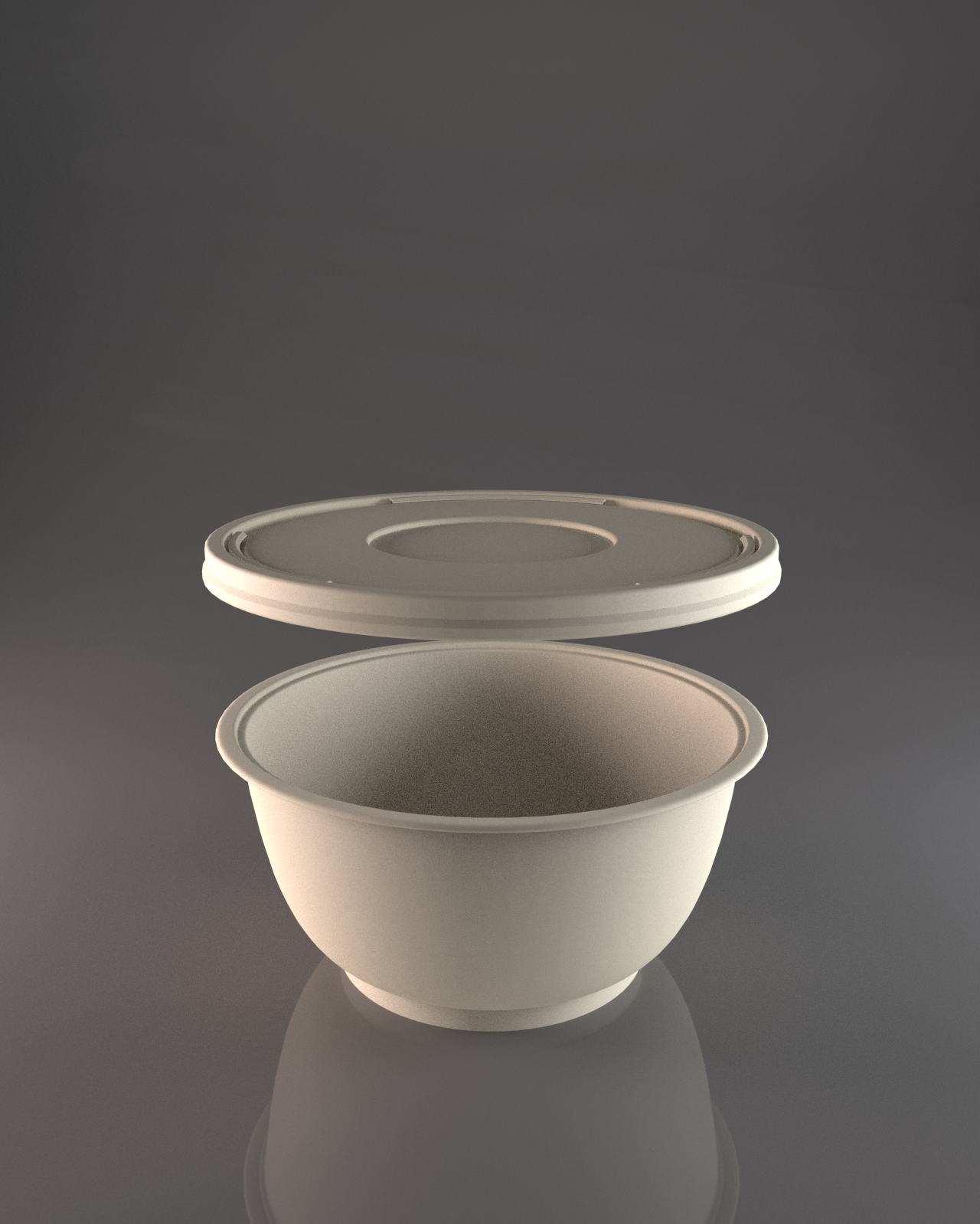
The bottom section is made of bamboo fibers, designed to hold the broth, retain heat, and prevent leaks.
The top section is made of transparent algae-based bioplastic, which holds the noodles and showcases the contents. It is fully biodegradable, breaking down completely in nature.
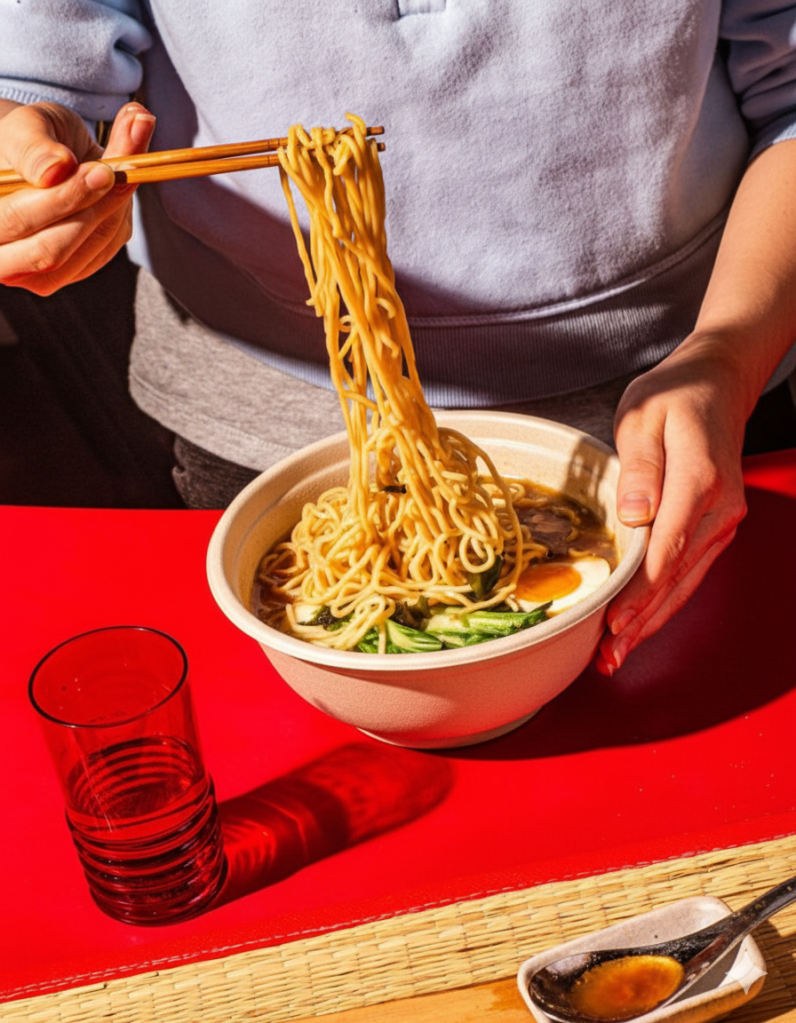
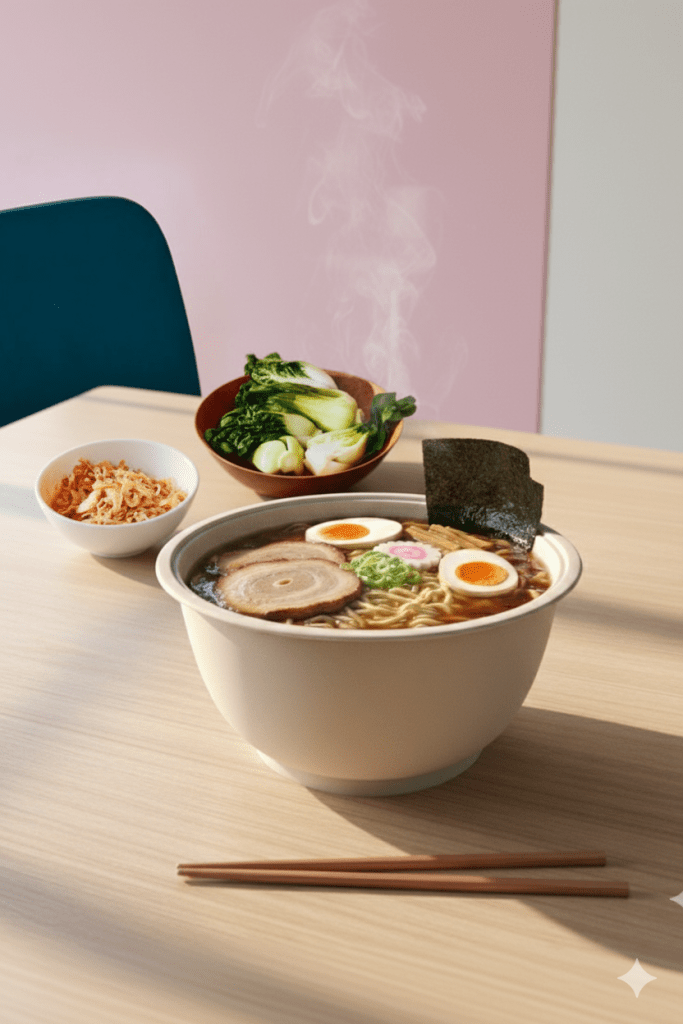
Additionally, this combination of materials not only ensures a sustainable solution but also enhances the user experience by keeping the noodles fresh and the broth hot until mealtime, reflecting a commitment to both quality and environmental responsibility.
In this container design, sustainability and lifecycle considerations are a top priority. Materials such as bamboo and algae are sourced from natural and renewable resources. Although the container is single-use, it fully decomposes in nature, can be composted, and is recyclable, minimizing environmental impact.

This design supports a “modern yet eco-friendly” image, reduces carbon footprint, and lowers plastic usage. By combining functionality with environmentally responsible materials, it aligns with a broader vision of sustainability while offering a high-quality, convenient experience for consumers.

 defneguneri.blog